I mean, sure, wheels would require an essentially impossible evolutionary path, but they’re still very dependent on terrain
Some goats can climb grades no wheel could touch. Wheels have issues with long grasses and roots, don’t work great if they don’t have good contact with the terrain, aren’t good for climbing or ledges, and fast to wear in dirty environments
You can specialize to overcome these challenges, but they’re less general purpose. Wheels that would let you travel over uneven terrain need to be big and/or very complex
Wheels work really, really well on suitable surfaces, but they’re specialist technology. Quadrepeds are very stable and control their weight distribution much better
From an engineering standpoint, you’d be better off putting the robot dogs on skateboards or in a wheeled carrier then making the kind of high-torque wheels that can lock to work like feet when needed - that’s what we use when designing wheels for the kinds of travel these dogs were designed for
Wheels are obviously incredibly useful tech, but they’re not the ideal solution for every problem
Tracks are the “wheels” solution to bad terrain, which also includes soft surfaces (e.g. snow, mud). Even an excavator can climb ~35 degrees, and a lighter less top-heavy tracked vehicle should be able to do a bit better. Compared to legs, tracked vehicles are faster, more efficient, and more durable.
Goats are exceptional climbers, but animals use legs as part of a full-body motion. Slapping legs onto a box isn’t the same as putting legs on a torso that also bends, twists, and flexes.
I mean I guess it’s part of the iterative process of improving quadruped robots, but at this stage of development it still seems gimmicky.


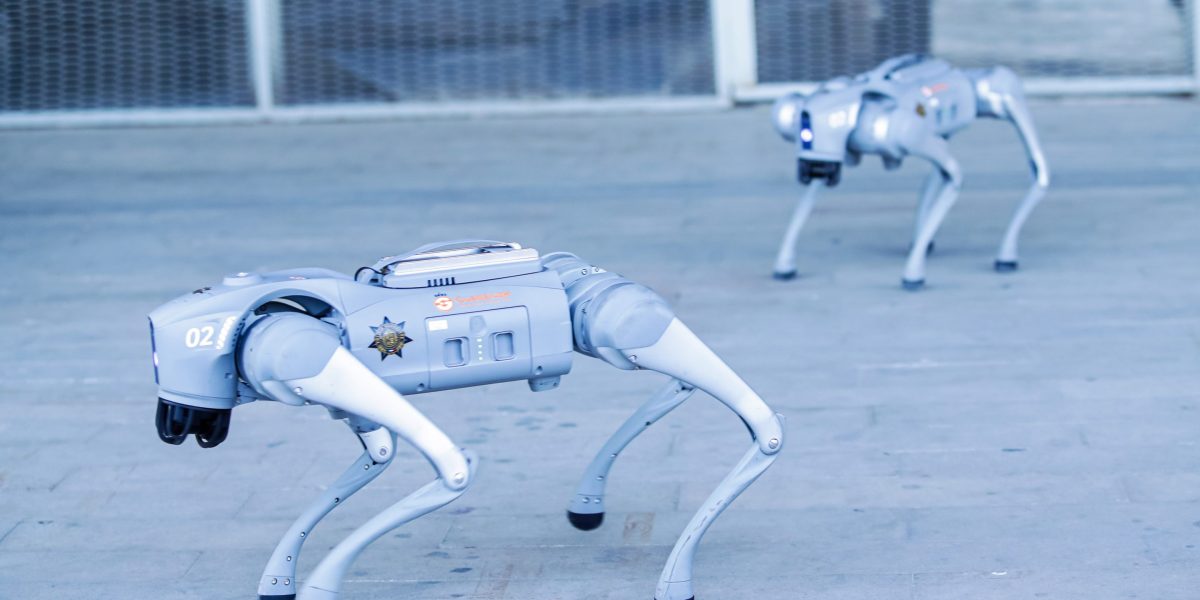
Quadrupedal motion is pervasive in nature because wheels (and tank treads for bad terrain) can’t readily form via natural processes: https://en.wikipedia.org/wiki/Rotating_locomotion_in_living_systems#Biological_barriers_to_wheeled_organisms
Also this goes back to my note about climbing and jumping. Those would give limbs a real advantage in applications where it is relevant.
I mean, sure, wheels would require an essentially impossible evolutionary path, but they’re still very dependent on terrain
Some goats can climb grades no wheel could touch. Wheels have issues with long grasses and roots, don’t work great if they don’t have good contact with the terrain, aren’t good for climbing or ledges, and fast to wear in dirty environments
You can specialize to overcome these challenges, but they’re less general purpose. Wheels that would let you travel over uneven terrain need to be big and/or very complex
Wheels work really, really well on suitable surfaces, but they’re specialist technology. Quadrepeds are very stable and control their weight distribution much better
From an engineering standpoint, you’d be better off putting the robot dogs on skateboards or in a wheeled carrier then making the kind of high-torque wheels that can lock to work like feet when needed - that’s what we use when designing wheels for the kinds of travel these dogs were designed for
Wheels are obviously incredibly useful tech, but they’re not the ideal solution for every problem
Tracks are the “wheels” solution to bad terrain, which also includes soft surfaces (e.g. snow, mud). Even an excavator can climb ~35 degrees, and a lighter less top-heavy tracked vehicle should be able to do a bit better. Compared to legs, tracked vehicles are faster, more efficient, and more durable.
Goats are exceptional climbers, but animals use legs as part of a full-body motion. Slapping legs onto a box isn’t the same as putting legs on a torso that also bends, twists, and flexes.
I mean I guess it’s part of the iterative process of improving quadruped robots, but at this stage of development it still seems gimmicky.