

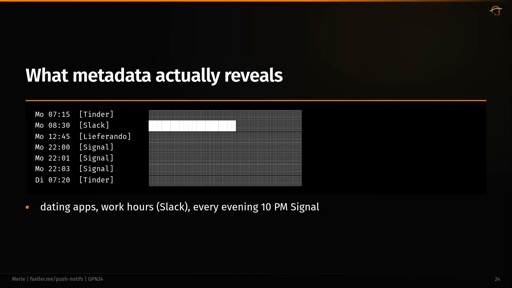
I just started my de-googling journey recently, and so the mechanics of notifications were still unclear to me, and I found this video super helpful.
It explains how most mobile messaging apps (including privacy-focused ones like Signal) rely on Google and Apple’s centralized servers to deliver push notifications, which exposes vast amounts of user metadata.
Here’s the YT link, for people who prefer it: https://youtu.be/c3ennD3wKn0
Disagree, it serves to illustrate the same kind of monopoly google has on push notifications.
UnifiedPush is not a push service, it is a distributor. It is a proxy for push services, it does not send out its own notifications.
Also, ntfy does not need to use unified push, it simply makes put or post notifications, like it does in the self-hosted version. The public instance of ntfy does use unified push, yes. For instance, I do not want my http push notifications flying around in plain text with notifications about my private services being up or down, so I don’t use one. I arrange the connectivity to my applications myself.
Here again, google has done us all a disservice by obscuring the difference.
I’m tired of having to correct people, but I will do it anyway.
This is wrong. If you look up the definition for monopoly, you will realize it is false. At worst, it’s a duopoly. If we exclude Huaweii Push, etc.
That is also wrong. Idk how you got the idea of it being a “proxy”.
“UnifiedPush is a decentralized push notification system that lets you choose the service you want to use. It’s designed to be privacy-friendly, flexible, and open — making it perfect if you want control over your push notifications.”
https://unifiedpush.org/