

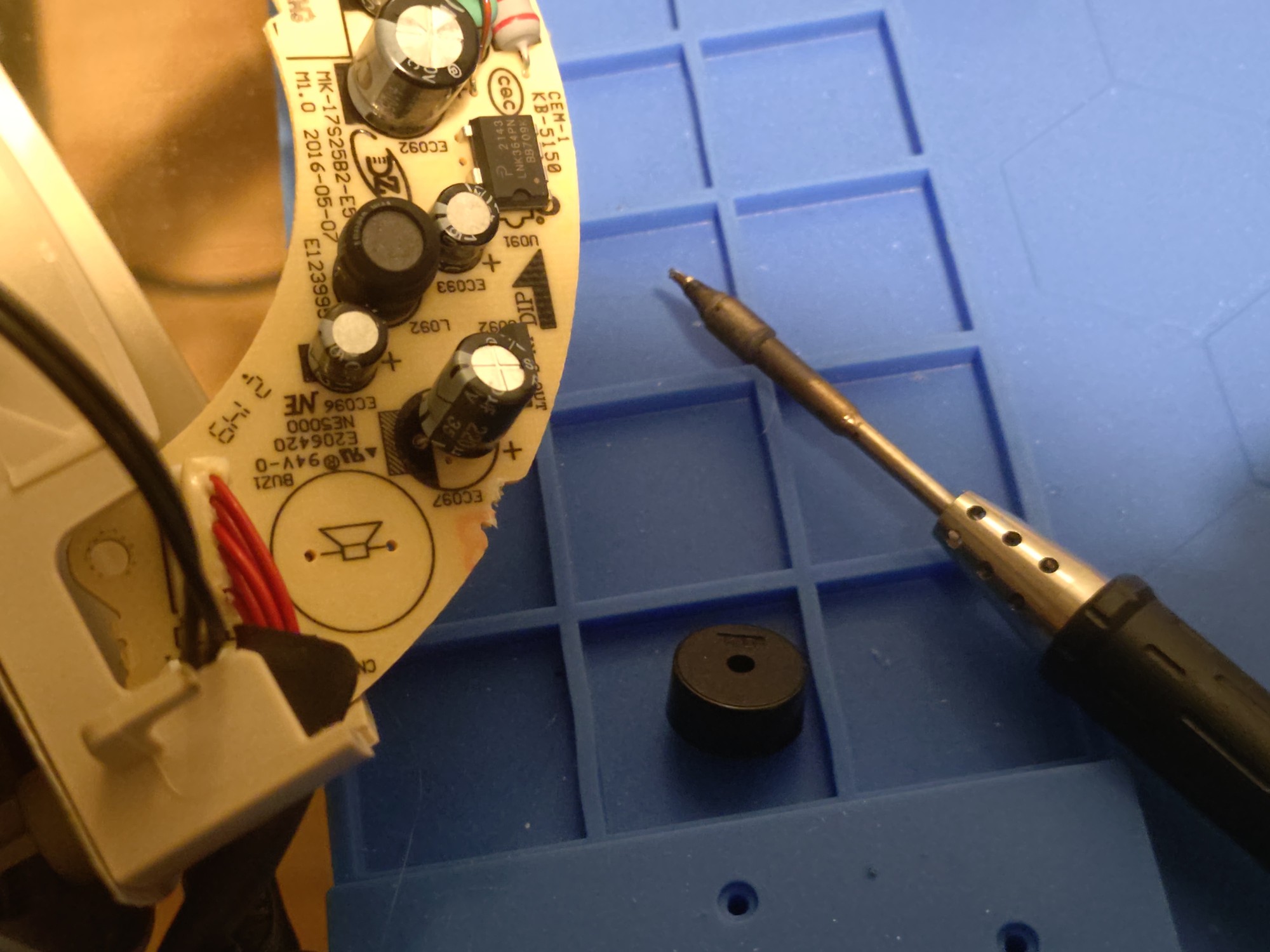
It beeps when it’s done.
It beeps when you press the button.
It beeps when you place it on the base.
But today, it beeps no more.
I classify this as a repair.
It beeps when it’s done.
It beeps when you press the button.
It beeps when you place it on the base.
But today, it beeps no more.
I classify this as a repair.
Luckily this is a pretty simple thing to diy, at least for a kettle.
If anyone wants to repeat this, but doesn’t know how:
Is it a legit repair if you don’t have some parts left over after reassembling? 🤔
In the best case it’s the buzzer.
😂
Is there no need to replace it with a resistor of equal value?
I don’t think piezo buzzers are exactly resistive loads, or that cutting speakers would break appliances either way. My kettle works the same as before, just less annoying.
I doubt a beeper would be put in series with something important…
I mean, then again…
Fair enough. It’s just in my mind that anytime I see one of these posts they always replace the component with a resistor, so I was wondering why this post didn’t. But that makes sense, so thanks!
Yeah! Yeah! CUT ITS FUCKING LEGS OFF!
IT BEEPS NO MORE.
Have they stopped, Clarice? The beeping of the appliances?
Will it still work even though there’s no longer a connection across where the beeper used to be? Got a toaster that beeps so high that even our cat gets freaked out
I can’t make guarantees, but it should be fine. There’s some microcontroller inside that’s programmed to turn the voltage high or low. It just flicks the switch and doesn’t know or need to know what happens behind it.